

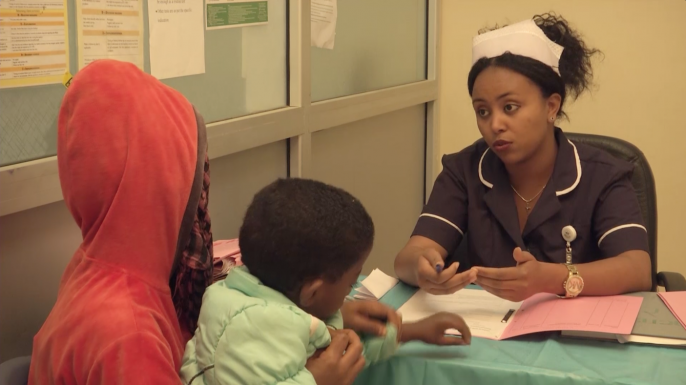
Family Planning provides confidential, preventative health care to both females and males to help with their reproductive health needs. Services of family planning that are provided at our department include prescription and dispensing of various birth control methods, pregnancy testing, common screening and treatment of sexually transmitted infections/diseases and provision of emergency contraception. In addition, counseling and referral services are also provided to clients. The hospital is also devoted to give service in permanent methods of contraception including vasectomy (no-scalpel vasectomy) and bilateral tubal ligation with mini laparotomy and laparoscopy.
The hospital is open 24 hours every day including weekends to provide all method of contraception. This service is provided free of charge and no payment will be requested. You do not need to have a referral to get the service.

Birth Control Options Available
Long Acting Reversible Contraceptives (LARC)
IUD & IUS
The IUD & IUS (contains hormones) are intrauterine devices inserted into the uterus. They prevent the sperm from fertilizing the egg. Depending on the type of IUD inserted, it can last up to 10 years. IUS can last up to 5 years. They are 98-99% effective.
Implant
The Implant is a small, flexible rod that is implanted under the skin of the upper, inner arm. The implant works by stopping the body from releasing an egg so that no egg is present to be fertilized. The Implant is good for 3 years and is 99% effective.
Permanent method of contraception
This is a permanent method of birth control. Both the woman (a tubal ligation) and a man (a vasectomy) can be sterilized. Both require surgical procedure, the vasectomy being a great deal more minor than the tubal ligation. A person must be very sure of his/her desire to not have any or more children since this is a permanent method. This method is 99.9% effective but does not protect against HIV or Sexually Transmitted Diseases.
The Pill
The birth control pill is a combination estrogen/progestin pill, which prevents ovulation. It is a small pill that is taken by mouth every day to ensure protection from pregnancy. The pill is more than 99% effective if taken correctly.
Depo Provera
Depo Provera is an injection given every 10-13 weeks in the arm or hip. It contains no estrogen so it is safe for women unable to use estrogen products. Menses become non-existent on Depo Provera and it is more than 99% effective.
Diaphragm
The diaphragm is a small latex rubber cup, which fits inside the vagina over the cervix. It must be put in place prior to the act of intercourse. If used correctly it is 94% effective and can protect you from certain Sexually Transmitted Diseases (not HIV)
Condoms
Male condoms, either latex or non-latex, are fitted over the penis prior to each act of intercourse. If used each and every time correctly, condoms are 97% effective and if used in conjunction with contraceptive foam the effectiveness rises to 99%. The female condom fits up inside the vagina and must be put in place with every act of intercourse. Its effectiveness is similar to the male condom. Condoms are the only birth control method to protect against HIV and Sexually Transmitted Diseases.
Natural Family Planning
Natural family planning requires women to be able to recognize their potential fertile days. To be successful with this method, a woman must chart her temperature and vaginal mucus every day. During her fertile period a barrier method or abstinence must be used. If used correctly Natural Family Planning is 91-99% effective. This method does not protect from HIV or Sexually Transmitted Diseases.